ROCOES Optical
HOME > Optical Filters
HOME
> Optical Filters
>
IR absorb filters
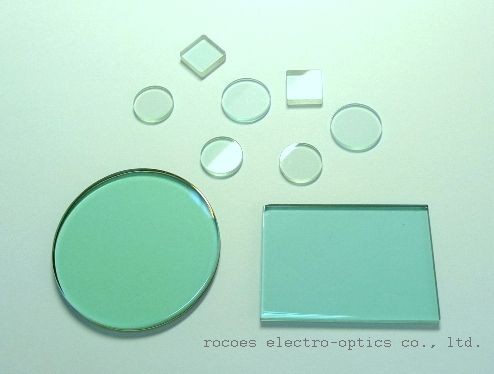
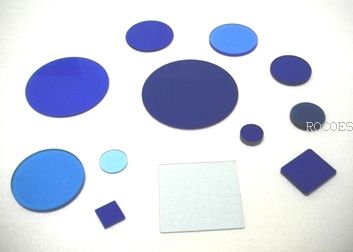
IR Absorbing Filters (Blue Glass / NIR Absorption Optics)
IR absorbing filters (commonly known as blue glass filters, NIR absorbing filters, or phosphate/ion-doped heat absorbing glass) are optical elements engineered with material bulk absorption to selectively absorb near-infrared radiation while transmitting visible light.
Functions:
Unlike dielectric IR-cut interference filters that reflect infrared light back into the system, blue glass absorbs NIR optical wavelengths ($700\text{ nm} - 1100\text{ nm}$) within its chemical matrix. This provides superior angle-of-incidence (AOI) stability without wavelength shifting or internal spectral reflections, making it ideal for high-precision optical sensors, digital camera modules (CCD/CMOS), and thermal isolation in high-power illumination systems.
Applications:
CMOS/CCD camera lenses
Medical imaging devices
Heat-isolating light engines
Optical measurement equipment
Automated Optical Inspection (AOI) systems
#IRC620H #IRC610H #IRC600H
#Information and Notes
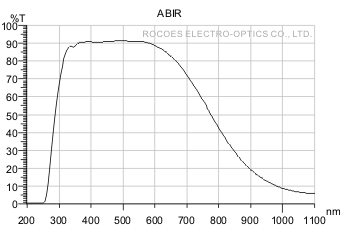
ITEM NO: ABIR
Spectral Characteristics
Tave>80% @ 400-580nm
Tave<5% @ 900-2500nm
Physical Characteristics
Glass filters: 3mm
Borosilicate: 1.1mm
Square: 8x8 - 150x150mm
Round: Dia8 - 150mm
Resistant Temperature
Glass filters: 100℃
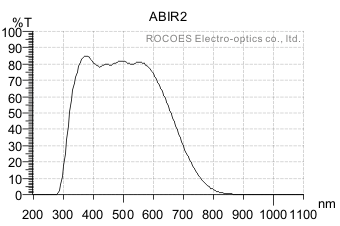
ITEM NO: ABIR2
Spectral Characteristics
Tave>70% @ 400-570nm
Tave<5% @ 850-2500nm
Physical Characteristics
Glass filters: 3mm
Borosilicate: 1.1mm
Square: 8x8 - 150x150mm
Round: Dia8 - 150mm
Resistant Temperature
Glass filters: 100℃
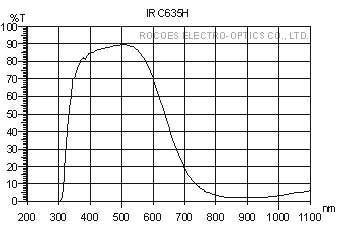
ITEM NO: IRC635H
Spectral Characteristics
T50%=635 +/-10nm
Tave>80% @ 400-550nm
Tave<5% @ 800-1000nm
Physical Characteristics
Glass filters: 0.7mm
Square: 8x8 - 50x50mm
Round: Dia8 - 50mm
Resistant Temperature
Glass filters: 100℃
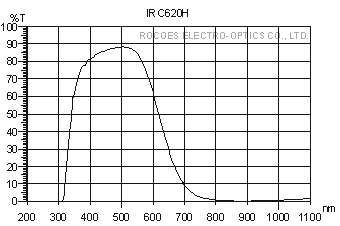
ITEM NO: IRC620H
Spectral Characteristics
T50%=620 +/-10nm
Tave>80% @ 400-530nm
Tave<5% @ 800-1000nm
Physical Characteristics
Glass filters: 1.0mm
Square: 8x8 - 50x50mm
Round: Dia8 - 50mm
Resistant Temperature
Glass filters: 100℃
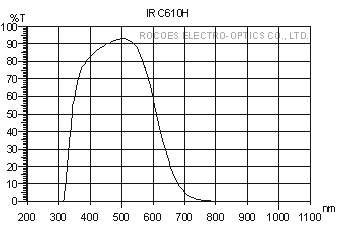
ITEM NO: IRC610H
Spectral Characteristics
T50%=610 +/-10nm
Tave>80% @ 400-550nm
Tave<5% @ 800-1000nm
Physical Characteristics
Glass filters: 1.5mm<
Square: 8x8 - 50x50mm
Round: Dia8 - 50mm
Resistant Temperature
Glass filters: 100℃
Information and Notes
1. IR absorbing glass filters are manufactured from specialized optical formulations melted into solid glass blocks, which are precision-processed into thin optical substrates via wire sawing, surface grinding, and two-sided optical polishing.
2. Absorptive glass substrates can be combined with multilayer dielectric thin films to enhance spectral edge steepness, broaden rejection bandwidths, increase target passband transmittance, or eliminate surface Fresnel reflection loss (AR coating).
3. Thin-film vacuum depositions are executed using Physical Vapor Deposition with Electron Beam Gun Evaporation (PVD-EBGE) technology for high film packing density and superior adhesion strength.
4. Explore related products and technical solutions: