ROCOES Optical
HOME > Optical Filters
HOME
>
Optical Filters
>
UV Leak Detect Filter
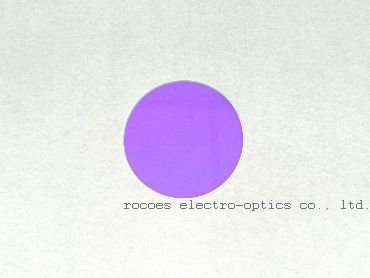
UV Leak Detection Filters / Fluorescence Detection Optics
UV leak detection filters (also known as fluorescence detection filters, UV inspection optics, or fluorescent dye tracer optics) are high-performance optical bandpass components designed to isolate specific ultraviolet wavelengths while blocking ambient visible interference.
Functions:
Engineered to transmit target UV wavelengths (such as 365 nm UVA or 395 nm) while blocking unwanted visible light and background illumination. When focused onto optical systems, automotive air conditioning lines, hydraulic fluid circuits, or industrial pipework containing fluorescent tracer dyes, these filters ensure high UV signal intensity to excite fluorescence, allowing rapid, visual detection of micro-leaks and structural defects with high contrast and zero background noise.
Applications:
Industrial fluid/hydraulic leak testing
Forensic trace evidence collection
UV fluorescent inspection instruments
Automotive HVAC refrigerant leak detection
Non-destructive testing (NDT) fluorescent penetrant inspection
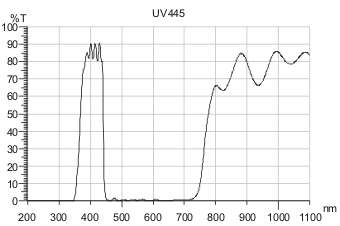
ITEM NO: UV445
Spectral Characteristics
T50% =445 +/-5nm
Tave>75% @ 390-410nm
Tave<3% @ 460-700nm
Physical Characteristics
Glass: 1.1mm
Tempered Glass: 2, 3, 4, 5mm
Borosilicate: 1.1mm
Square: 8x8 - 220x220mm
Round: Dia8 - 210mm
*Tempered glass has a minimum size limit.
Resistant Temperature
Glass: 150℃
Tempered Glass: 250℃
Borosilicate: 450℃
Information and Notes
1. UV leak detection filters feature multi-layer dielectric interference coatings comprising approximately 28 layers vacuum-deposited on optical glass substrates to achieve high UV peak transmission and deep visible attenuation.
2. Vacuum thin-film depositions are executed using Physical Vapor Deposition with Electron Beam Gun Evaporation (PVD-EBGE) technology, ensuring high coating packing density, precise UV center wavelength positioning, and robust durability.
3. Spectral transmittance curves represent physical sample measurements captured at normal incidence (0° angle of incidence, AOI).
4. Transmittance curves reflect actual physical sample measurement data and are subject to minor manufacturing tolerances between production lots while remaining strictly within engineering optical specifications.
5. Explore related products and technical solutions: