ROCOES Optical
HOME > For Lighting
HOME
>
For Lighting
>
RGB/CMY mix filters
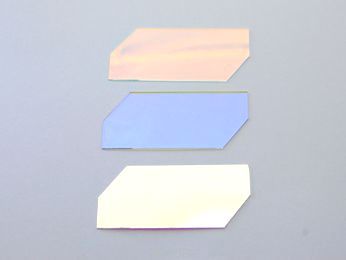
RGB & CMY Color Mixing Filters (Interference Optics)
RGB (Red, Green, Blue) additive and CMY (Cyan, Magenta, Yellow) subtractive color mixing filters are specialized optical dichroic optics designed for dynamic, full-spectrum color control in professional lighting systems.
Functions:
Utilizes advanced optical thin-film interference principles to achieve seamless color blending, precise chromaticity control, and high luminous efficiency. Engineered with vacuum-deposited inorganic dielectric layers (PVD-EBGE), these filters withstand extreme thermal radiation up to 450°C–500°C without color shift, aging, or fading under high-power LED arrays, HID lamps, and halogen light engines.
Applications:
Architectural floodlights
Facade projection mapping systems
Commercial display spotlights
Entertainment lighting consoles
Intelligent stage luminaires
(moving head spots/washers, scanners, profile framing lights)
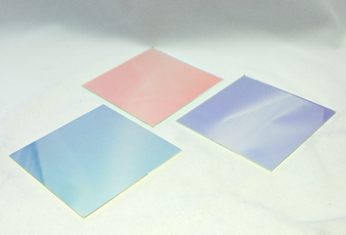
ITEM NO: RGB
Spectral Characteristics
Red
Green
Blue
Physical Characteristics
Glass: 1.1mm
Temper glass: 2.0, 3.0mm
Borosilicate: 1.1mm
Square: 8x8 - 310x320mm
Round: Dia8 - 300mm
Resistant Temperature
Glass: 150℃
Tempered glass: 250℃
Borosilicate: 450℃
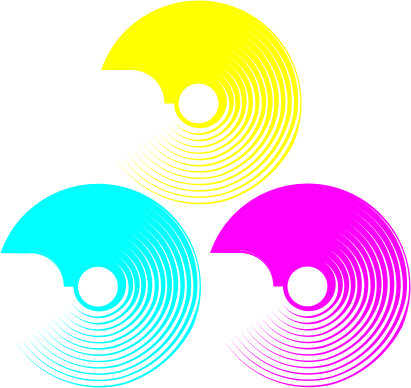
ITEM NO: UVCUT400
Spectral Characteristics
Cyan
Magenta
Yellow
Physical Characteristics
Glass: 1.1mm
Tempered glass: 2.0, 3.0mm
Borosilicate: 1.1mm
Square: 8x8 - 310x320mm
Round: Dia8 - 300mm
Resistant Temperature
Glass: 150℃
Tempered glass: 250℃
Borosilicate: 450℃
Information and Notes
1. RGB (Red, Green, Blue) and CMY (Cyan, Magenta, Yellow) color mixing filters are manufactured using optical thin-film vacuum deposition, featuring precision multilayer dielectric stacks typically comprising 24 to 48 layers to achieve precise chromaticity thresholds.
2. Custom spectral transmittance curves, optical density parameters, and color saturation levels can be engineered upon request to match specific light engines and optical system requirements.
3. Advanced Physical Vapor Deposition with Electron Beam Gun Evaporation (PVD-EBGE) technology ensures high film density, exceptional thermal resistance (withstanding temperatures up to 450°C–500°C), and zero color fading under continuous high-power illumination.
4. Spectral transmittance curves represent measurements at normal incidence (0° angle of incidence). Non-transmitted light within specific spectral bands is reflected by the dielectric thin-film stack without absorption. Penetration color may shift slightly at oblique angles of incidence (blue-shift effect).
5. Physical chemical tempering or thermal strengthening applies to substrate processing with minimum dimension and geometric shape limitations. Please refer to Introduction to Tempered Glass for technical details.
6. Spectral curves display measured sample values and may exhibit minor tolerances between manufacturing production batches while strictly complying with defined optical specifications.
7. Dimension abbreviations: "Dia." or "Ø" denotes circular outer diameter.
8. Website specifications are provided for reference only. Final production and delivery comply with mutually agreed engineering specifications and actual physical products.
9. Explore related products and technical solutions: