ROCOES Optical
HOME > Glass
HOME
>
Glass
>
Tempered glass
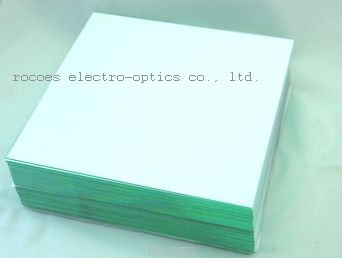
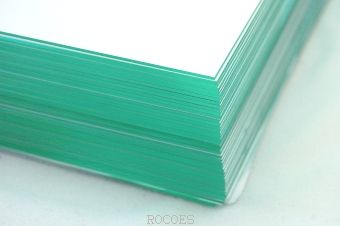
Tempered Glass (Safety Glass)
Tempered glass, also referred to as toughened or safety optical glass, is thermal or chemical treated glass designed to deliver exceptional physical strength and thermal resilience in demanding operational environments.
Functions:
Significantly enhances the mechanical impact strength, fracture toughness, and thermal shock resistance of flat optical glass substrates. Upon fracture, it breaks into small, blunt granular fragments, drastically reducing safety hazards in heavy-duty applications.
Applications:
Precision instrument display windows
Industrial machinery viewports
Explosion-proof light covers
Outdoor waterproof lighting enclosures
Protective covers for optical sensors
Harsh-environment dust-proof windows.
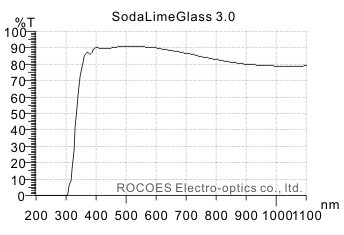
ITEM NO:TEMPGLAS3
Spectral Characteristics
Tave>88% @ 360-700nm
Physical Characteristics
Thickness: 3.0 +0/-0.2mm
Square: 30x30 - 1000x1000mm
Round: Dia50 - 600mm
Resistant Temperature
250℃
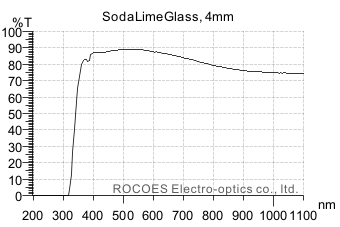
ITEM NO:TEMPGLAS4
Spectral Characteristics
Tave>88% @ 360-700nm
Physical Characteristics
Thickness: 3.0 +0/-0.2mm
Square: 30x30 - 1000x1000mm
Round: Dia50 - 600mm
Resistant Temperature:
250℃
Information and Notes
1. Tempered glass processing is subject to structural limitations regarding minimum substrate thickness, dimensions, and geometry.
2. For detailed technical principles and process parameters, please refer to Introduction to Tempered Glass.
3. Spectral curves represent actual sample measurement data. Minor lot-to-lot variations may occur within standard manufacturing tolerances while fully adhering to specified optical definitions.
4. Pre- and post-tempering mechanical and surface treatments are available, including sandblasting, precision drilling, CNC edge polishing, chamfering, and thin-film coating. Popular optical coating options include:
Dichroic Color Filters (Color Conversion)Heat Reflecting Filters (Hot Mirrors)
Anti-Reflective Coatings (High Transmittance)
UV-Cut Coatings (UV Blocking & Reflection)