ROCOES Optical
HOME > Glass
HOME
>
Glass
>
Low-iron Glass
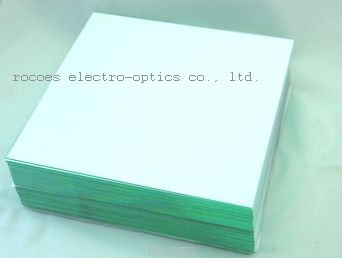
Low-Iron Glass Substrates
Low-iron glass (commonly referred to as ultra-white glass, super-white glass, or extra-clear optical float glass) is produced with reduced iron impurity content, effectively eliminating the characteristic greenish edge tint of standard glass.
Functions: Delivers higher light transmittance than standard float glass, particularly in the near-infrared (NIR) spectrum where its cost-to-performance ratio serves as an excellent alternative to BK7. Provides exceptional clarity and neutral color rendition for optical systems.
Applications:
Touch panels
Solar cell covers
Sensor protection covers
Protective display windows
Optical coating substrates
Precision instrument viewports
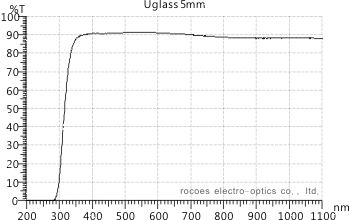
ITEM NO:UGLASS5
Spectral Characteristics
Tave>88% @ 400-700nm
Physical Characteristics
Thickness: 5mm
Square: 100x100 - 990x990mm
Round: Dia100- 990mm
Resistant Temperature
150℃
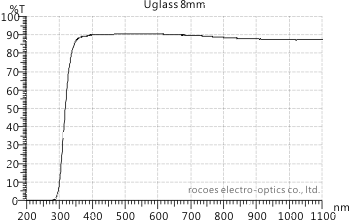
ITEM NO:UGLASS8
Spectral Characteristics
Tave>88% @ 400-700nm
Physical Characteristics
Thickness: 8mm
Square: 100x100 - 990x990mm
Round: Dia100- 990mm
Resistant Temperature
150℃
Information and Notes
1. Low-iron glass offers slightly higher light transmittance than standard soda-lime glass, with particularly superior transmission in the near-infrared (NIR) spectrum, presenting a cost-effective alternative to BK7.
2. Custom geometrical profiles, non-standard thicknesses, CNC edge grinding, and precision drilling are available to meet OEM integration requirements.
3. Spectral transmittance curves represent measurements at normal incidence (0° angle of incidence). Non-transmitted light within the spectrum is absorbed by the physical optical properties of the glass substrate.
4. For applications requiring maximized light throughput, please refer to our Anti-Reflective (AR) Coating Solutions.
5. To enhance mechanical strength and thermal shock resistance, please explore our Tempered Glass Solutions.
6. Website specifications are provided for reference only. Final production and delivery comply with mutually agreed engineering specifications.